

Dagoth-ur
Fapstronaut
The role of Testosterone when it binds to our brain's androgen receptors and other target tissues (vital organs) is to transcribe important information to our DNA 1
The organs targeted and the actions caused by this transcription include:
Central nervous system
- Mood
- Memory
- HPG protection
- Libido
Heart
- Cardioprotection
- QTc interval shortening
- anti-arrythmic action
- Vasodilation
- Myocardial anti-inflammatory action
Vascular system (arteries & veins)
- Endothelial function
- Blood flow
- Vascular resistance regulation
- Anti-inflammation
Liver
- Decreased cholesterol
- Increased HDL fatty acid oxidation
- Inhibition of gluconeogenesis (catabolism)
- Decreased hepatic steatosis & inflammation
Kidneys
- Increased EPO synthesis
- Increased erythrocytosis
Sex organs
- Sperm production
- Prostate/penile growth
- Erectile function
Bones
- Bone density
- Bone growth
- Bone marrow production of RBCs
Skin
- Hair production
- Sebum production
- Collagen production
Skeletal muscle
- Muscle cell differentiation/proliferation
- Increased mass
- Increased strength
Metabolic system (adipose tissue, pancreas, liver)
- Increased glucose-stimulated insulin secretion
- Decreased glucose output
- Correct Leptin & Insulin regulation
- Inhibition of lipid uptake
- Adipogenesis
- Fatty acid synthesis
From a study on rats; who share close physiology to humans, we can see that sexual satiety from orgasm or climax, greatly reduces androgen receptor density 2
Meaning that for a period of time, most of the androgen receptors at the brain and various organs have been switched off. This would typically last for 72 hours according to the study if it were done once, then AR density would slowly recover. After 15 days a good portion will have recovered but it may take months for full AR restoration. PMO addicts however do not do this once every few months, nor do they start after adolescence when their brains have been fully developed. They tend to do it more than once a day to new 'novel mates' that wouldn't quite exist in reality, and more harmful perhaps is that most men and women consume porn by age 13 it's now being revealed 3
We can have all of the Testosterone in the world; but how can it be used if there are hardly any active receptors for them to bind to?
(This is the part that parent companies of porn websites would loathe anyone knowing, and so they pay faux 'science' websites to pump out the same useless rhetoric about testosterone levels; and never androgen receptors).
If we cannot transcribe most of our Testosterone to DNA (important for women too) then how can we adequately perform those 42 or so vital functions that require T uptake, how suboptimal are our bodies functioning at? And if most people start it as a young teenager when their brain is developing; what will this do in the long term? Here's a butt load of studies.
Effects of androgen deprivation/low T uptake on insulin resistance and obesity 4
Effects of androgen suppression on QoL in males 5 focusing on:
body feminisation;
sexual changes;
relationship changes;
cognitive and affective symptoms;
fatigue, sleep disturbance, depression;
physical effects (added by authors).
Note: Castration levels of Testosterone are more extreme, but won't deviate too much from low Testosterone uptake.
Effects of exercise on 2 different types of androgen suppression 6
Androgen deprivation side effects on cardiovascular, bone, insulin and mental/cognitive health 7
Various studies on hormone disruption 8, 9, 10, 11, 12, 13, 14, 15
Neurotransmitter downregulation 16, 17, 18, 19
Decrease in grey matter volume 20, 21, 22, 23, 24, 25
Reduction in mental health 26, 27, 28, 29, 30, 31
CNS (Central nervous system) fatigue 32, 33, 34, 35
Gastric/GI issues 36, 37, 38, 39, 40, 41
Insulin & leptin resistance (obesity) 42, 43, 44, 45, 58
Sexual dysfunction & sperm reduction 46, 47, 48, 49, 50, 51, 52, 59,
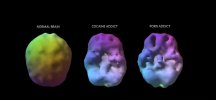
The late Gary Wilson (pathologist who wrote the book 'Your Brain on Porn' and really started to expose the dangers of PMO) also has excellent information on his website. Including how it alters teenage mind's, potentially permanently. (Neuroplasticity and newly created dopamine pathways) 53
And how our brain's primitive reward systems are simply not built for unnatural supranormal stimuli 54
What about the myth that PMO can make one blind? By the above data, it can't be a myth. We know from the above studies that PMO can increase insulin & leptin resistance due to inflammation at the mPOA, arcuate nucleus and affects on the blood brain barrier, it can cause hyperglycemia through insulin/leptin resistance. This is because the mPOA and nearby arcuate nucleus especially; tightly linked, regulates mating and hunger or survival behaviours, and become temporarily dysfunctional. In one with type-2 diabetes especially, this can cause diabetic retinopathy (damage to the rear of the eye and then partial or permanent blindness if untreated) this is generally after a few years. If one with diabetes isn't aware PMO can cause insulin resistance and hyperglycemia, they may struggle to manage it over time.
Testosterone vs dopamine:
Some additional info, dopamine is connected to Testosterone levels. O gives a very strong dopamine hit which down-regulates dopamine, O also releases prolactin which further lowers T - lowered dopamine from O further raises prolactin - which further lowers T (O > raised prolactin > lowered T and DOPA (lowered receptors for both) > more raised prolactin). As dopamine is lowered, so is gonadaltropin-releasing hormone. Without GnRH the brain's pituitary doesn't have what is needed to signal for the release of LH (leutinizing hormone) and FSH (follicle stimulating hormone). LH goes to the ovaries and testes to signal the release of estrogen and testosterone. Repeated O seems like it stacks everything against a person. 55, 56
Vitamin D/D3 can raise T levels (by raising dopamine) 57, whilst sugar can help lower T levels 58.
06/08/26: Dopamine, addiction and loss of drive
Dopamine itself is a large part of the PMO issue and addiction. Constant unnaturally high surges of dopamine will give striong positive feelings as it is our reward hormone. Our brain will create new neural pathways to hit the limbic system or nucleus accumbens with that dopamine more efficiently. This fills these areas up with DeltaFosB which activates addiction genes. The pre frontal cortex over times gets hypfrontia and loss of impulse control, it begins to see the source of easily gained bad dopamine, as good for survival. Cues leading up to when the dopamine from PMO is normally attained, can signal the release dopamine - a now automated response by our pre frontal cortex's basal ganglia. An invisible hand now guides us. But there is a down regulation and destruction of those dopamine receptors to protect the body, this over time can cause anhedonia and loss of enjoyment, leading to feelings of depression. More new and extreme content one may not enjoy is normally sought in these cases to surpass the low dopamine receptors. Serotonin & GABA (calming neurotransmitters) and ATP cellular energy are also heavily spent with dopamine surges, further causing mental and physical fatigue as well as severely disrupting sleep. We'll experience physical fatigue too as dopamine is the man with the starting pistol in the CNS' baton/relay race, to green light the sending of electrical impulses from the brain to the muscles.
Dopamine overstimulation or supra massive stimuli or everywhere and we don't realize it. Sugar and junk food, smart devices and instant access to unlimited data, social media websites and the unpredictable nature of them and their notifications. Their high traction short form videos interspersed between numerous low traction videos by the algorithm (gambling essentially). Smoking, alcohol, in some cases even gaming and music. And of course P websites. It's a balancing act, these neural pathways are in close proximity and exacerbate one another - which help addictions remain. Addiction is not just PMO, PMO is one leg amongst many holding up the table which itself is addiction to dopamine.
Our testosterone and estrogens, along with our neurotransmitters are so important for everyday functioning. For thought, for exercise and for the motivation to get ahead in life. When we interfere with and abuse them:
Depression, social anxiety, no drive or determination, difficulty losing body fat, difficulty gaining noticeable lean mass, brain fog and forgetfulness, fatigue, sexual dysfunction, loneliness, 42 organ functions that work at suboptimal levels, a seemingly inescapable cycle.
I think a good analogy is that this turns people into the walking dead. Are you living or just barely surviving without much care? Don't let life be transitory, you are capable of near anything and deserve a normal shot at life. Whenever you feel the journey is hard, read this page and remind yourself just how many ways that one moment of pleasure, is utterly destroying you. And also, think about how much better life could be without that one destructive moment.
Stay the course warrior.
The organs targeted and the actions caused by this transcription include:
Central nervous system
- Mood
- Memory
- HPG protection
- Libido
Heart
- Cardioprotection
- QTc interval shortening
- anti-arrythmic action
- Vasodilation
- Myocardial anti-inflammatory action
Vascular system (arteries & veins)
- Endothelial function
- Blood flow
- Vascular resistance regulation
- Anti-inflammation
Liver
- Decreased cholesterol
- Increased HDL fatty acid oxidation
- Inhibition of gluconeogenesis (catabolism)
- Decreased hepatic steatosis & inflammation
Kidneys
- Increased EPO synthesis
- Increased erythrocytosis
Sex organs
- Sperm production
- Prostate/penile growth
- Erectile function
Bones
- Bone density
- Bone growth
- Bone marrow production of RBCs
Skin
- Hair production
- Sebum production
- Collagen production
Skeletal muscle
- Muscle cell differentiation/proliferation
- Increased mass
- Increased strength
Metabolic system (adipose tissue, pancreas, liver)
- Increased glucose-stimulated insulin secretion
- Decreased glucose output
- Correct Leptin & Insulin regulation
- Inhibition of lipid uptake
- Adipogenesis
- Fatty acid synthesis
From a study on rats; who share close physiology to humans, we can see that sexual satiety from orgasm or climax, greatly reduces androgen receptor density 2
Meaning that for a period of time, most of the androgen receptors at the brain and various organs have been switched off. This would typically last for 72 hours according to the study if it were done once, then AR density would slowly recover. After 15 days a good portion will have recovered but it may take months for full AR restoration. PMO addicts however do not do this once every few months, nor do they start after adolescence when their brains have been fully developed. They tend to do it more than once a day to new 'novel mates' that wouldn't quite exist in reality, and more harmful perhaps is that most men and women consume porn by age 13 it's now being revealed 3
We can have all of the Testosterone in the world; but how can it be used if there are hardly any active receptors for them to bind to?
(This is the part that parent companies of porn websites would loathe anyone knowing, and so they pay faux 'science' websites to pump out the same useless rhetoric about testosterone levels; and never androgen receptors).
If we cannot transcribe most of our Testosterone to DNA (important for women too) then how can we adequately perform those 42 or so vital functions that require T uptake, how suboptimal are our bodies functioning at? And if most people start it as a young teenager when their brain is developing; what will this do in the long term? Here's a butt load of studies.
Effects of androgen deprivation/low T uptake on insulin resistance and obesity 4
Effects of androgen suppression on QoL in males 5 focusing on:
body feminisation;
sexual changes;
relationship changes;
cognitive and affective symptoms;
fatigue, sleep disturbance, depression;
physical effects (added by authors).
Note: Castration levels of Testosterone are more extreme, but won't deviate too much from low Testosterone uptake.
Effects of exercise on 2 different types of androgen suppression 6
Androgen deprivation side effects on cardiovascular, bone, insulin and mental/cognitive health 7
Various studies on hormone disruption 8, 9, 10, 11, 12, 13, 14, 15
Neurotransmitter downregulation 16, 17, 18, 19
Decrease in grey matter volume 20, 21, 22, 23, 24, 25
Reduction in mental health 26, 27, 28, 29, 30, 31
CNS (Central nervous system) fatigue 32, 33, 34, 35
Gastric/GI issues 36, 37, 38, 39, 40, 41
Insulin & leptin resistance (obesity) 42, 43, 44, 45, 58
Sexual dysfunction & sperm reduction 46, 47, 48, 49, 50, 51, 52, 59,
The late Gary Wilson (pathologist who wrote the book 'Your Brain on Porn' and really started to expose the dangers of PMO) also has excellent information on his website. Including how it alters teenage mind's, potentially permanently. (Neuroplasticity and newly created dopamine pathways) 53
And how our brain's primitive reward systems are simply not built for unnatural supranormal stimuli 54
What about the myth that PMO can make one blind? By the above data, it can't be a myth. We know from the above studies that PMO can increase insulin & leptin resistance due to inflammation at the mPOA, arcuate nucleus and affects on the blood brain barrier, it can cause hyperglycemia through insulin/leptin resistance. This is because the mPOA and nearby arcuate nucleus especially; tightly linked, regulates mating and hunger or survival behaviours, and become temporarily dysfunctional. In one with type-2 diabetes especially, this can cause diabetic retinopathy (damage to the rear of the eye and then partial or permanent blindness if untreated) this is generally after a few years. If one with diabetes isn't aware PMO can cause insulin resistance and hyperglycemia, they may struggle to manage it over time.
Testosterone vs dopamine:
Some additional info, dopamine is connected to Testosterone levels. O gives a very strong dopamine hit which down-regulates dopamine, O also releases prolactin which further lowers T - lowered dopamine from O further raises prolactin - which further lowers T (O > raised prolactin > lowered T and DOPA (lowered receptors for both) > more raised prolactin). As dopamine is lowered, so is gonadaltropin-releasing hormone. Without GnRH the brain's pituitary doesn't have what is needed to signal for the release of LH (leutinizing hormone) and FSH (follicle stimulating hormone). LH goes to the ovaries and testes to signal the release of estrogen and testosterone. Repeated O seems like it stacks everything against a person. 55, 56
Vitamin D/D3 can raise T levels (by raising dopamine) 57, whilst sugar can help lower T levels 58.
06/08/26: Dopamine, addiction and loss of drive
Dopamine itself is a large part of the PMO issue and addiction. Constant unnaturally high surges of dopamine will give striong positive feelings as it is our reward hormone. Our brain will create new neural pathways to hit the limbic system or nucleus accumbens with that dopamine more efficiently. This fills these areas up with DeltaFosB which activates addiction genes. The pre frontal cortex over times gets hypfrontia and loss of impulse control, it begins to see the source of easily gained bad dopamine, as good for survival. Cues leading up to when the dopamine from PMO is normally attained, can signal the release dopamine - a now automated response by our pre frontal cortex's basal ganglia. An invisible hand now guides us. But there is a down regulation and destruction of those dopamine receptors to protect the body, this over time can cause anhedonia and loss of enjoyment, leading to feelings of depression. More new and extreme content one may not enjoy is normally sought in these cases to surpass the low dopamine receptors. Serotonin & GABA (calming neurotransmitters) and ATP cellular energy are also heavily spent with dopamine surges, further causing mental and physical fatigue as well as severely disrupting sleep. We'll experience physical fatigue too as dopamine is the man with the starting pistol in the CNS' baton/relay race, to green light the sending of electrical impulses from the brain to the muscles.
Dopamine overstimulation or supra massive stimuli or everywhere and we don't realize it. Sugar and junk food, smart devices and instant access to unlimited data, social media websites and the unpredictable nature of them and their notifications. Their high traction short form videos interspersed between numerous low traction videos by the algorithm (gambling essentially). Smoking, alcohol, in some cases even gaming and music. And of course P websites. It's a balancing act, these neural pathways are in close proximity and exacerbate one another - which help addictions remain. Addiction is not just PMO, PMO is one leg amongst many holding up the table which itself is addiction to dopamine.
Our testosterone and estrogens, along with our neurotransmitters are so important for everyday functioning. For thought, for exercise and for the motivation to get ahead in life. When we interfere with and abuse them:
Depression, social anxiety, no drive or determination, difficulty losing body fat, difficulty gaining noticeable lean mass, brain fog and forgetfulness, fatigue, sexual dysfunction, loneliness, 42 organ functions that work at suboptimal levels, a seemingly inescapable cycle.
I think a good analogy is that this turns people into the walking dead. Are you living or just barely surviving without much care? Don't let life be transitory, you are capable of near anything and deserve a normal shot at life. Whenever you feel the journey is hard, read this page and remind yourself just how many ways that one moment of pleasure, is utterly destroying you. And also, think about how much better life could be without that one destructive moment.
Stay the course warrior.
Last edited:


